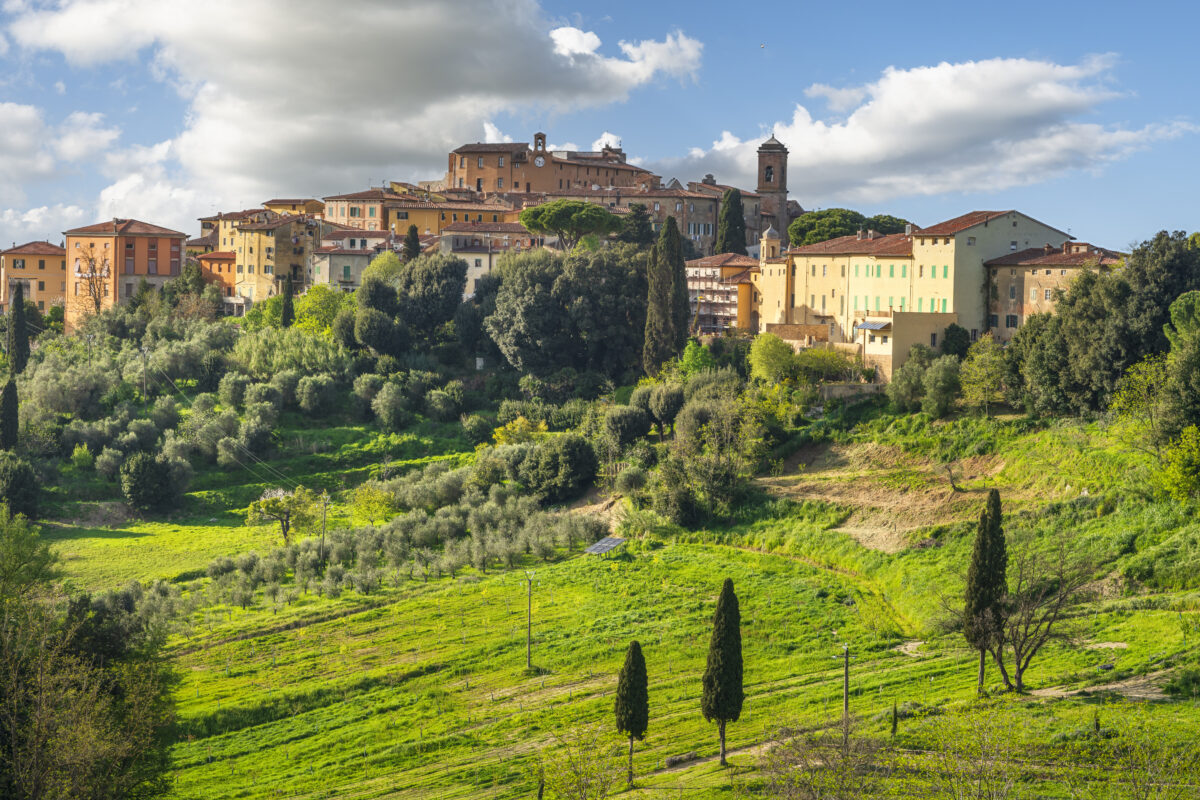


Just a few kilometers from Villa Maya, among the gentle hills of the Pisan countryside, lies Lari: a village that smells of cherry trees, aged wood, and ancient stories.
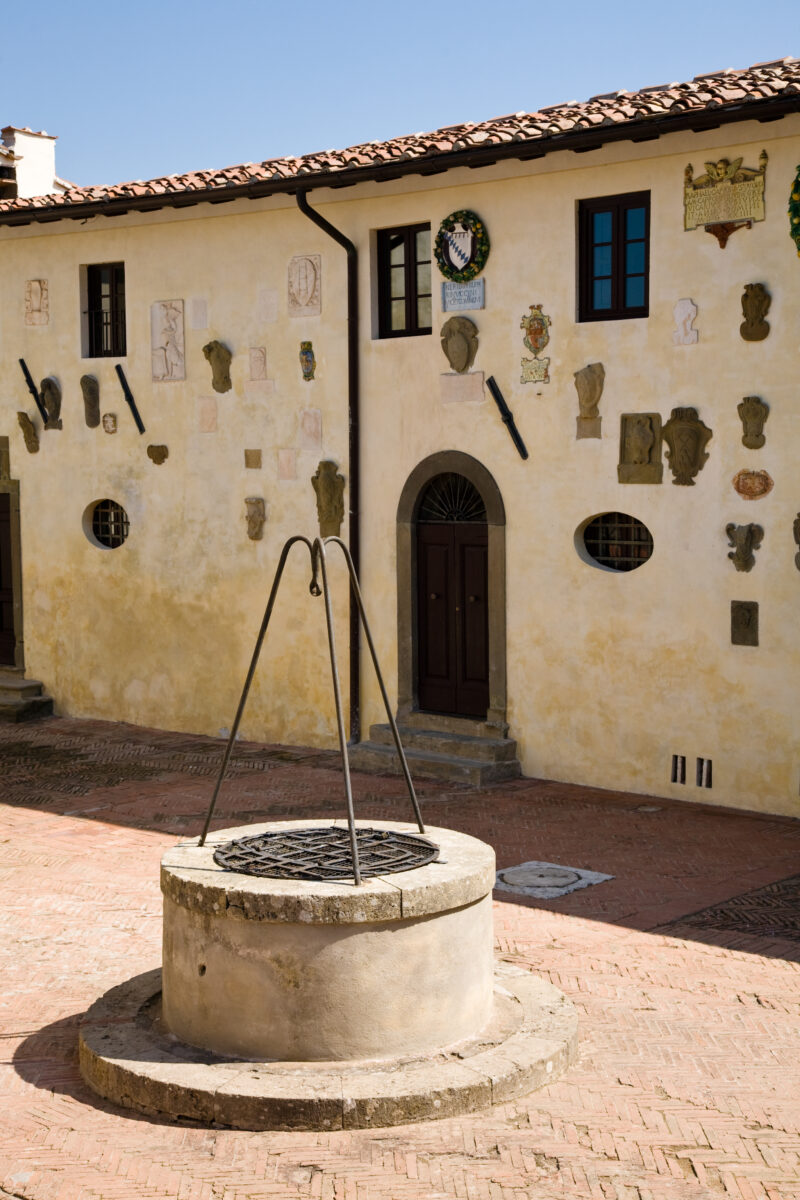
A castle overlooking the town, narrow alleys climbing between workshops and rose-colored stone walls, and the slow rhythm of a bygone life — a life that here has never truly faded.
It is in this setting that Simone Ceccotti, together with Barbara, carries on the family butcher shop founded in 1956.
A place that goes beyond the idea of a simple shop: a true workshop of flavor, where meats come from local farms, cured meats are hand-processed, and every taste tells the story of an authentic and sincere Tuscany.
Simone is also one of the few remaining guardians of the Mallegato, an ancient blood sausage recognized as a Slow Food Presidium — a gesture of memory transformed into flavor.
A tradition that doesn’t merely survive but renews itself every day, with the same dedication of those who believe that the value of things lies in the time devoted to doing them well.
It is from him that Chef Susy Fantei selects the meats that arrive each week in the kitchen at Villa Maya.
A silent yet profound dialogue, built on trust and mutual respect.
We meet her in her kitchen, as the scent of herbs and broths mingles with the aroma of freshly poured Tuscan olive oil.
She smiles — with the calm that belongs only to those who cook in tune with the rhythm of the seasons.
Chef, how did your collaboration with Simone Ceccotti begin?
“It was a natural encounter,” she says.
“When you visit his butcher shop, you immediately understand that time there is not an enemy — it’s an ingredient.
Simone knows every farm, every animal, and works with a kind of respect that’s rare today. I look for the same thing in my dishes: authenticity, not appearance.”
What do local ingredients represent for you?
“They’re the foundation of everything. Every dish begins outside the kitchen — in the fields, in the markets, in shops like his.
When I cook his Cinta Senese pork, I’m not just preparing an ingredient — I’m carrying on a story.
It’s a responsibility, but also a form of gratitude.”
The Mallegato is a symbol of ancient Tuscan tradition. How does it find a place in your cuisine?
“I don’t use it often, but I deeply respect it. It’s a food that tells of a time when nothing was wasted, when cooking was wisdom, not fashion.
Today, when I work with one of Simone’s cuts, I think the same way: use everything, throw nothing away, value every part. That’s what I mean by respect.”
At Villa Maya, not a single ingredient arrives by chance.
Every supplier is part of a larger story — a network of people who share the same idea of real food, born from respect for the land, for the animals, and for the time it takes to do things properly.
“I like to say my cuisine isn’t made of recipes, but of people,” Susy adds.
“There are those who grow, those who raise, those who transform. I bring their stories together. That’s what you taste on the plate.”
In this weaving of hands, knowledge, and passion, Slow Food Pisa e Colline Toscane has also played an important role.
Giuseppe Fusco, the local representative, contributed to this collaboration by bringing values, awareness, and the desire to preserve what makes this land unique.
And so, in Susy’s hands, the cuts selected by Simone become dishes that enclose the scent of the earth and the memory of its traditions.
Each preparation is a dialogue between those who work the raw material and those who transform it into emotion.
Villa Maya and Macelleria Ceccotti: two different places, united by the same breath.
The slow, authentic, and profound breath of true Tuscan cuisine.
“Cooking is never just about food,” Susy concludes, her gaze drifting toward the window.
“It’s about time, relationships, and gratitude — and as long as those three things remain on the table, tradition will never stop living.”